DEFINITIVE REFERENCE FOR INDIAN CENT DIE VARIETIES


Home
Table of Contents
For Sale List
Numismatic Links
David's Numismatic Blog

1865 Fancy 5 Variety 1


Obverse 1

Reverse Q


Obverse Diagnostics


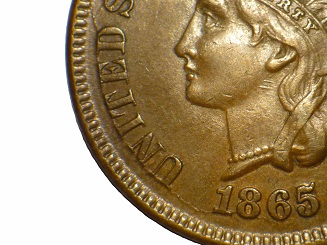
Date Position

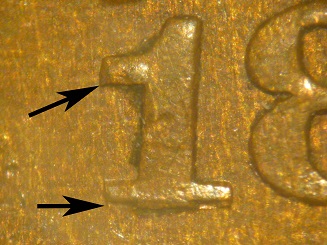
Repunched 1 to the South

Defective Digit Punch Anomaly


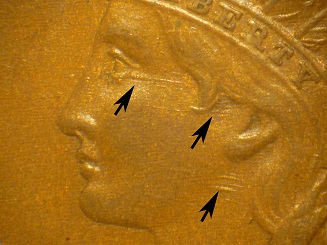
Die Scratches

Lint Hub-Through


Obverse 1.2 Die Cracks

Obv. 1.2 Die Crack from 6:00

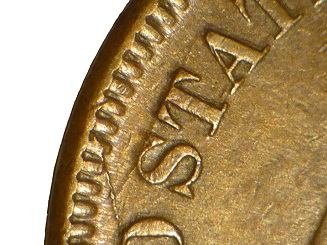
Obv. 1.2 Die Crack Connecting STA of STATES


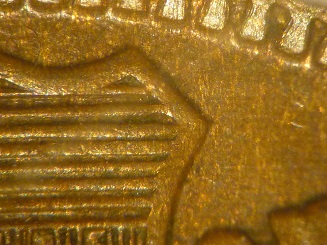
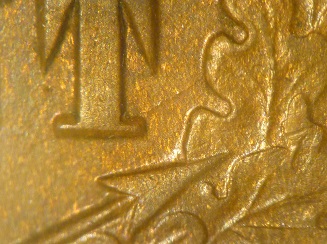
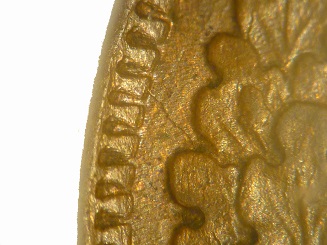
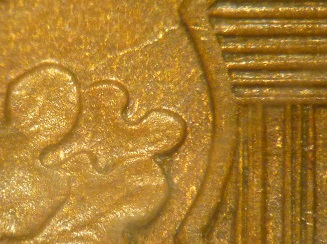
Macro Photography Of Obverse 1.3 Clash Marks

Clash Marks Between Feather 9 and Hair Curl

Clash Mark Above The 5 Digit


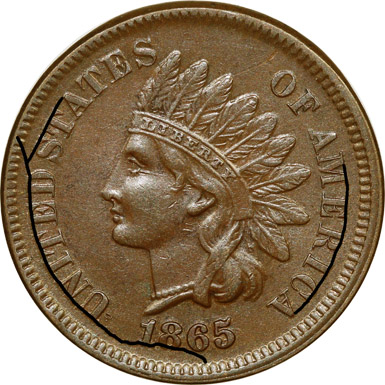
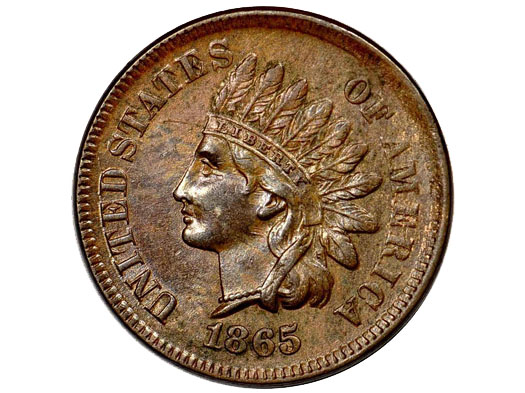
Obverse 1.3 Die Crack Mapping


Reverse Diagnostics


Die Crack from 12:30 to the Shield

Die Crack from 3:45 to Wreath

Die Crack from T of CENT to Wreath


Die Crack from 9:45 to Wreath

Die Crack from 10:45 to Wreath

Die Crack from Left Side of Shield to Wreath


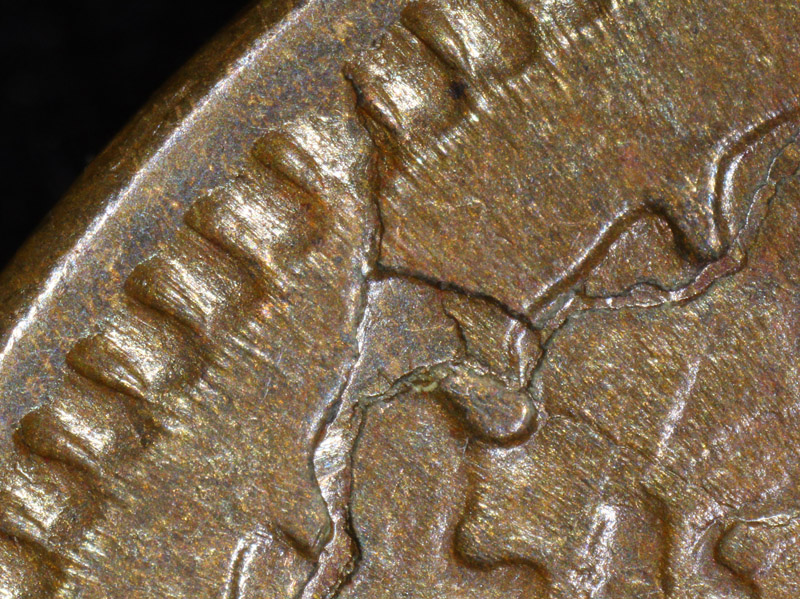
Macro Photography Of Reverse Q.3 Die Break and Clash Marks

Die Break At 10:30 (Click Image To Enlarge)

Clash Mark Between Shield and Right Wreath

Clash Marks Located Right Of Denomination


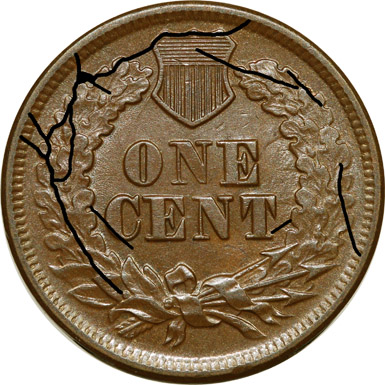
Reverse Q.3 Die Crack Mapping


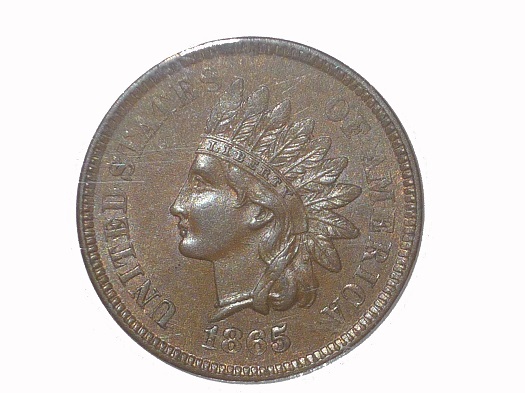
Obverse 1 is identified by date placement at LE, lint hub-through located right of 'LIBERT(Y)', date repunching that features initial date impressions to the south below the serif and base of the 1 and die scratches by the eye, ear and jaw.
Obv. 1.2:  Obverse 1 degrades with the advancement of die flow lines and the  development of the following die cracks:
1.  Die crack from the rim at 6:00 connects the bases of the 1 and 8 of the date as well as the tops of 'UNITED' and exits into the rim at 9:45.
2.  Die crack splits from die crack #1 at 9:30 and connects the tops of '(AME)RICA'.
Obv. 1.3:  Obverse 1 has clashed with Reverse Q and Obverse 1 has developed the following die crack:
3.  Light die crack segment connects the tops of 'A(MERICA)'.

Reverse Q has developed the following die cracks:
1.  Die crack from the rim at 12:30 extends through the top of the shield and continues into the top of the left wreath.
2.  Die crack from the rim at 3:45 extends upward into the right wreath.  A die crack segment located at the outer edge of the right wreath between 1:15 and 2:00 may be associated with the die crack from 3:45.
3.  Die crack segment extends from the top of the right base of CEN(T) to the right wreath.
4.  Die crack from the rim at 9:45 extends into the left wreath and continues downward into the olive leaves.
5.  Die crack from the rim at 10:45 extends downward into the left wreath and intersects die crack #4.
Rev. Q.2:  Reverse Q degrades with the advancement of die flow lines and die crack #1 has now extended farther and has intersected die crack #5.  Reverse Q has now developed the following die crack:
6.  Die crack segment extends diagonally and upward from within left wreath and continues through the horizontal bars of the shield.
7.  Die crack segment extending downward from the left wreath and through the lower left side of (C)ENT.
Rev. Q.3:  Reverse Q has clashed with Obverse 1 and a die break has occurred at the intersection of die cracks #1 and #5.  Reverse Q has developed the following die cracks:
8.  Die crack from the rim at 9:30 extends downward and intersects die crack #4.
9.  Light die crack splits from die crack #4 at 9:00 and extends upward through the left wreath, where it intersects die crack #5 at 10:00.

Comments:  Variety 1 was once thought to be a 5/4 overdate based on the appearance of the defect of the digit punch under the 5, but two cent specialist Frank Leone had shown that the date punch was used on some Two Cent obverse dies.  Thus, the erstwhile declaration of an overdate was unfounded and the correct explanation was the digit punch matrix.

Obverse 1 will later be paired with Reverse AP during the Variety 24 die pairing.

During late August 2021, John Grimmer submitted an example of Variety 1 that exhibited a much later Reverse Q die state than has been previously identified.  John's example is now the Variety 1b Plate Coin in order to capture the latest Reverse Q die state.  Upon examination of John's coin, I was able to determine that Reverse Q was in an 8 degree counter clockwise rotated position.  Since I did not measure the rotation of the Variety 1 and Variety 1a Plate Coins, I cannot determine if the 8 degree rotation I measured on the Variety 1b Plate Coin is a static rotational attribute of Variety 1.

Plate Coin (Variety 1):  Former D. Poliquin Collection, NGC MS64BN (PS)
Plate Coin (Variety 1a):  Images courtesy of Rick Snow of Eagle Eye Rare Coins, AU55
Plate Coin (Variety 1b):  Courtesy of John Grimmer Collection, AU55

Die States for 1865 Fancy 5 Variety 1

VARIETY 1

OBVERSE 1
REVERSE Q

VARIETY 1a

OBVERSE 1.2
REVERSE Q.2

VARIETY 1b

OBVERSE 1.3
REVERSE Q.3

Return to 1865 Varieties Table

Return to Date and Die Variety Analysis