DEFINITIVE REFERENCE FOR INDIAN CENT DIE VARIETIES


Home
Table of Contents
For Sale List
Numismatic Links
David's Numismatic Blog

1904 Variety 15


Obverse 17

Reverse Q


Obverse Diagnostics


Date Position

Die Flow Lines


Reverse Diagnostics


Reverse Q Die Flow Lines

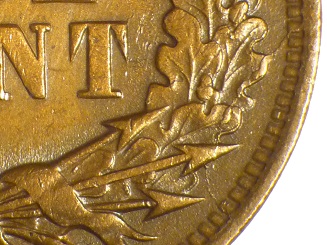
Reverse Q Die Crack from 3:15 and 4:15


Reverse Q.2 Retained Cud Between 3:15 and 4:15

Reverse Q.3 Cud Between 3:15 nd 4:15


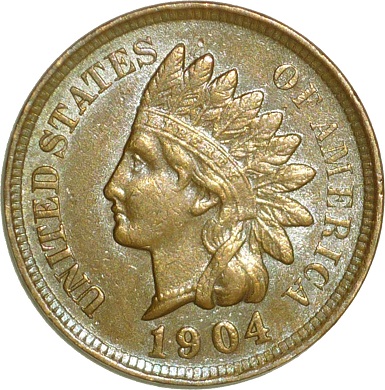
Obverse 17 is observed with date placement at LH and has developed moderately heavy die flow lines.

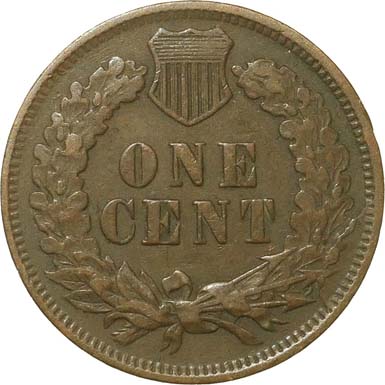
Reverse Q is in a similar die state as Obverse 17, with the advancement of moderately heavy die flow lines.  Reverse Q develops the following die crack:
1.  Die crack from the rim at 3:15 downward through the wreath to the rim at 4:15.
Rev. Q.2:  Reverse Q has nw developed a retained cud within the area defined by the die crack between 3:15 and 4:15.
Rev. Q.3:  Reverse Q has now developed a cud within the area between 3:15 and 4:15.

Comments:  The Reverse Q.2 retained cud was first identified in 'The Design Cud', by Paul Marvin and Arnold Margolis.  The Marvin and Margolis reference number is 1C-04-2R-Ret.  The  Variety 15b plate coin reflects a further incremental die state where the retained portion of die steel is now absent and metal has freely filled the void left behind.

Allen Glaser of Nebraska Coins was very kind in allowing me to use his images to illustrate Variety 15b for this book.

Plate Coin (Variety 15):  Richard Ashton Collection, AU55 details
Plate Coin (Variety 15a):  Keith Bock Collection, VF30
Plate Coin (Variety 15b):  Images courtesy of Allen Glaser

Die State for 1904 Variety 15

VARIETY 15

OBVERSE 17
REVERSE Q

VARIETY 15a

OBVERSE 17
REVERSE Q.2

VARIETY 15b

OBVERSE 17
REVERSE Q.3

Return to 1904 Varieties Table

Return to Date and Die Variety Analysis