Obverse
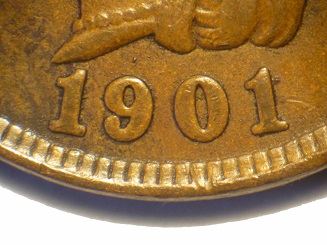
30 is observed with date placement of RH. Obverse 30 is in an
advanced die state with the development of die flow lines and a die
break connecting the bottom of the chin with the neck of Miss Liberty.
In addition, a die crack is seen from the die break and curving
upward into the field toward the chin.
Reverse
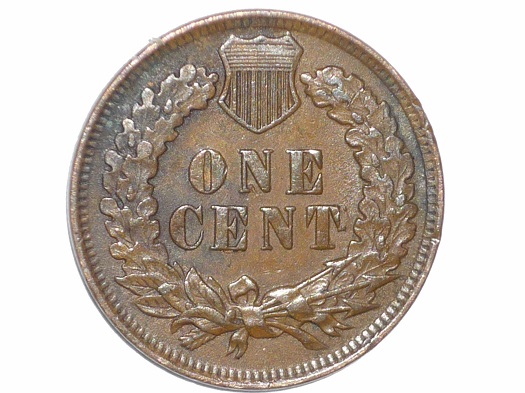
AD is in a similar die state as obverse 30, with die flow lines
visible. Reverse AD also develops two die cracks: 1. Die
crack loops from the bottom right arm of the T of CENT and continuing
to the top right of the T. The Die crack forms a die break within
and to the right of the bottom of the right arm of the T of CENT and
another, smaller die break in the field across the top of the T. 2. Die crack from the denticles at 7:00 into the arrow quill.
Comments: The
die break of obverse 30 was first brought to my attention by Ed
Nathanson in February 2015. Ed was kind enough to submit his coin
for attribution in this book.
The
point of interest for variety 25 is the die break under the chin that
forms during the advanced die state for obverse 30. Inspection of the
die break area reveals a smaller, but deeper die break within the
larger break that forms at the neck. This deeper die break is found
within the design and follows the contour of the neck and lower chin.