DEFINITIVE REFERENCE FOR INDIAN CENT DIE VARIETIES


Home
Table of Contents
For Sale List
Numismatic Links
David's Numismatic Blog

1886 Type I Variety 8


Type I Obverse 12

Reverse Q


Obverse Diagnostics


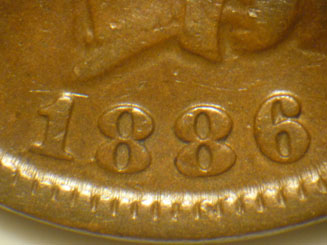
Date Position

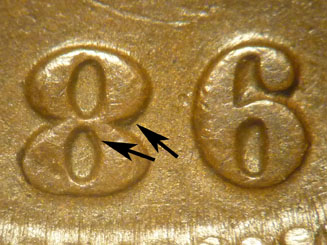
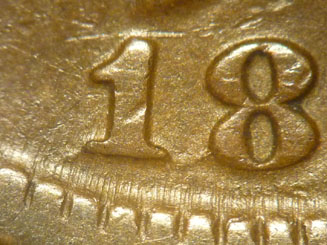
Repunched Second 8

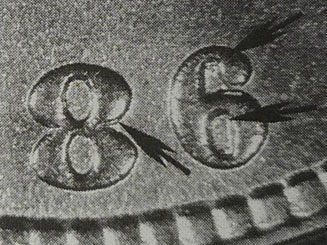
Early Die State Repunched 86


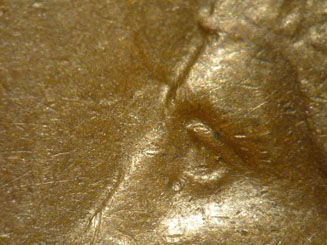
Clash Mark In Front Of Eye

Die Crack From 6:00 to 7:00


Reverse Diagonstics


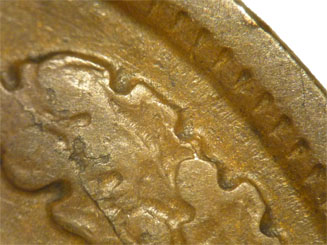
Die Crack From 1:30

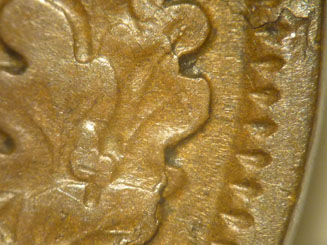
Die Crack From 3:30

Die Crack From 4:00


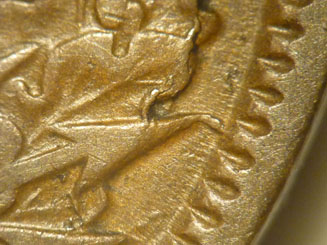
Die Crack From 6:30

Die Crack From 8:00

Die Crack From 11:30


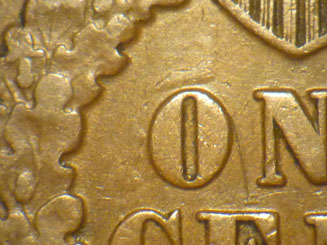
Clash Mark Through The C Of CENT

Clash Mark Above and To The Left Of O Of ONE

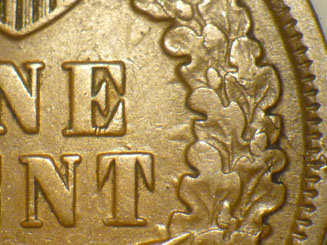
Clash Marks To The Right Of The Denomination


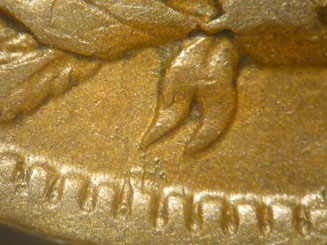
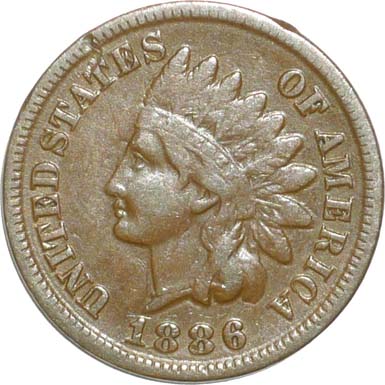
Type I Obverse 12 is identified by date placement at LE and date repunching that features initial date impressions to the south below the right side of the upper loop and to the west within the lower loop of the second 8 as well as initial date impressions to the south within both loops of the 6.  Type I Obverse 12 has developed heavy die flow lines and has acquired a heavy clash mark in front of the eye of Miss Liberty from a clashing event with Reverse Q.  Type I Obverse 12 develops the following die crack:
1.  Die crack from the rim at 6:00 connecting the 18 of the date and terminating into the rim at 7:00.

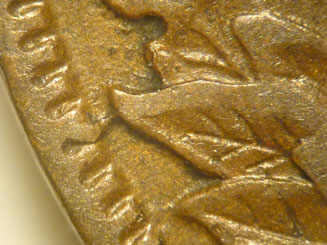
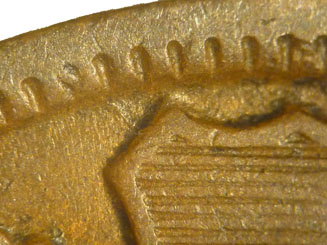
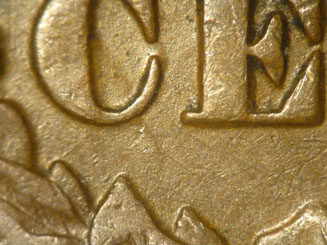
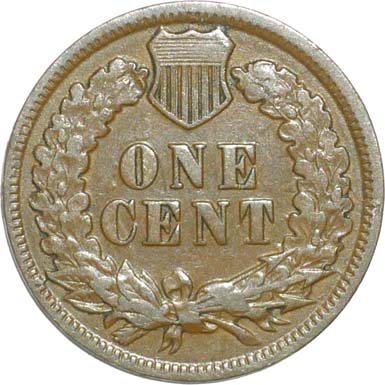
Reverse Q is in a similar die state as Type I Obverse 12, with the advancement of heavy die flow lines.  Reverse Q has acquired heavy clash marks through the C of CENT, above and to the left of the O of ONE and to the right of the denomination from a clashing event with Type I Obverse 12.  Reverse Q develops the following die cracks:
1.  Die crack from the rim at 1:30 into the right wreath.
2.  Die crack from the rim at 3:30 into the right wreath.
3.  Heavy die crack from the rim at 4:00 into the middle arrowhead.
4.  Die crack from the rim at 6:30 through the left side of the ribbon end and into the olive leaves.
5.  Die crack from the rim at 8:00 through the olive leaves.
6.  Die crack from the rim at 11:30 into the top left side of the shield.

Comments:  The Type I Obverse 12 initial date impressions within both loops of the 6 will fade in late die state examples, such as the above plate coin.  I have taken the liberty of using Rick Snow's image of the equivalent Snow 7 to illustrate the full initial date impressions of Type I Obverse 12.

Plate coin:  David Killough Collection, VF30

Return to 1886 Varieties Table

Return to Date and Die Variety Analysis