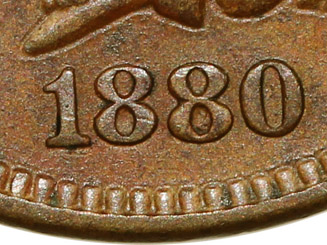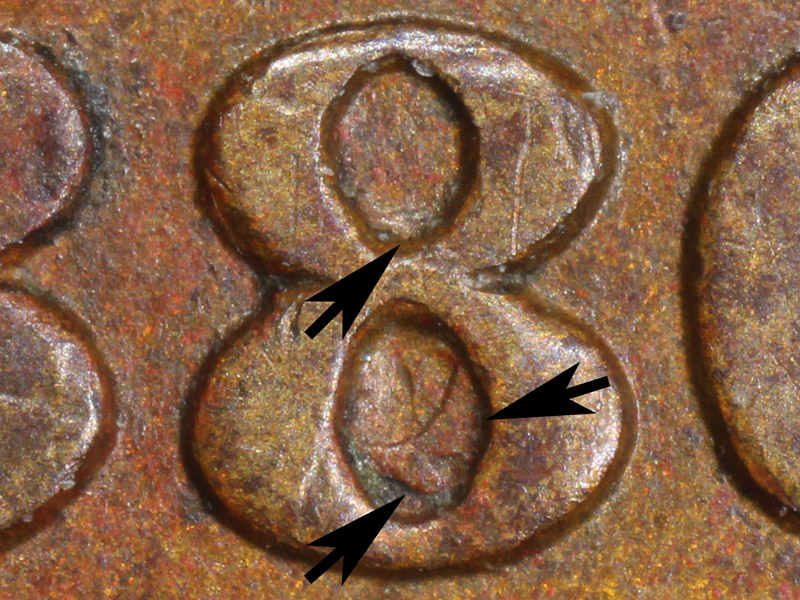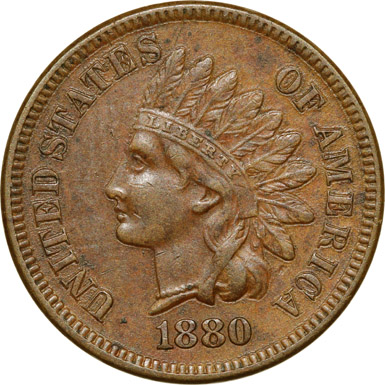
Obverse 12 is identified by date placement at C and date repunching
that features initial date impressions within the
lower loop and to the north within the upper loop of the second 8.
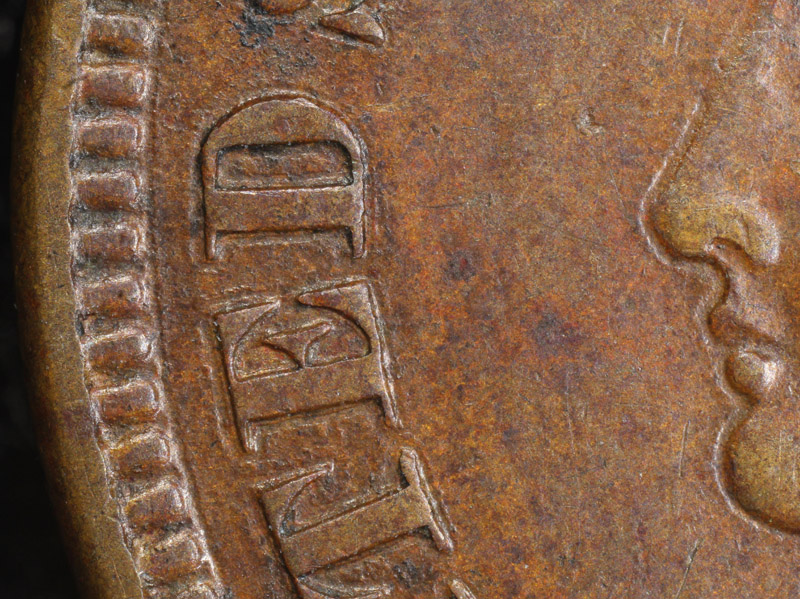
Obverse 12 exhibits noticeable die abrasion that has
resulted in outlines around all letters of the legend and portrait, as
well as rough areas around the letters of the legend.
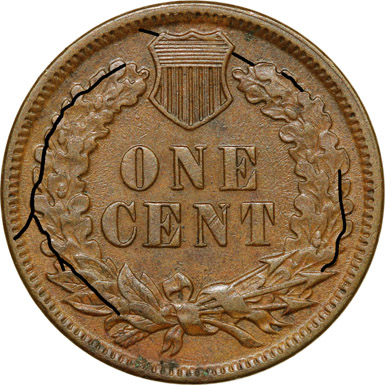
Reverse M is rotated 6 degrees clockwise and exhibits die abrasion of
the field areas, with design elements and lettering not exhibiting
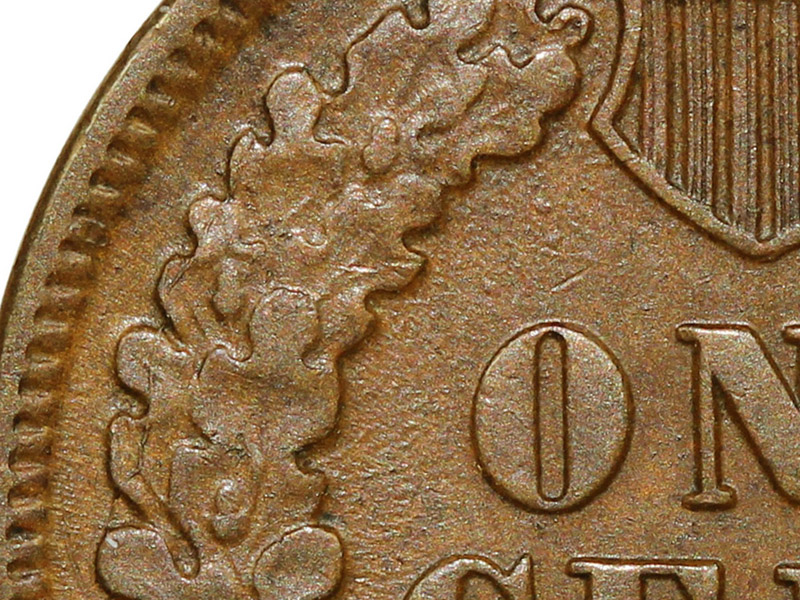
outlines. Reverse M has developed the following die cracks:
1. Die crack from the rim at 8:30 extends upward through the
outer edge of the left wreath to the top of the wreath. A lighter
die crack splits from die crack #1 at the outer edge of the oak leaf at
9:00 and extends downward through the olive leaves.
2. Die crack from the rim at 11:30 extends through the shield and
continues downward along the outer edge of the right wreath.
Comments: The extra
outlines of Obverse 12 are the result of metal loss from the fields of
the Obverse 12 Working Die during the abrasion of this die by the Mint.
The loss of metal on the field areas of the working die will
result in the field areas of the struck coin to be higher compared to a
normal, unabraded die. It should be noted that the Obverse 12
date area exhibits no outlines, which would most likely indicate the
Mint performed the abrasion of Obverse 12 prior to the date being
impressed into the working die.
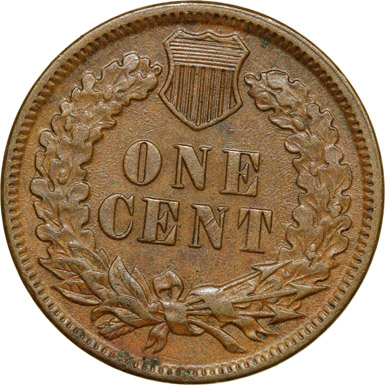
Plate coin:
Courtesy of David Killough Collection, XF40