DEFINITIVE REFERENCE FOR INDIAN CENT DIE VARIETIES


Home
Table of Contents
For Sale List
Numismatic Links
David's Numismatic Blog

1863 Variety 10


Obverse 11

Reverse L


Obverse Diagnostics


Obverse 11 Die Crack Mapping
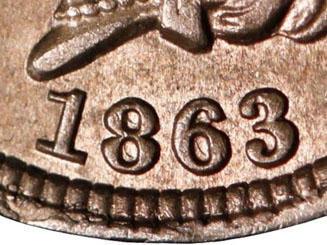


Date Position

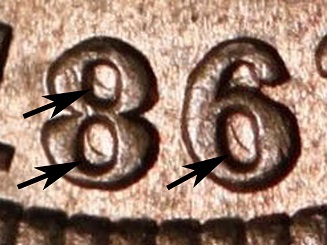
Repunched 86


Reverse Diagnostics


Reverse L.2 Die Crack Mapping
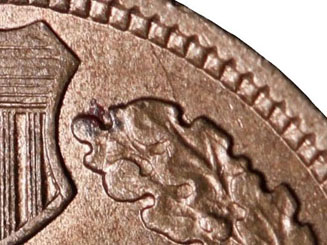

Die Crack From 12:45

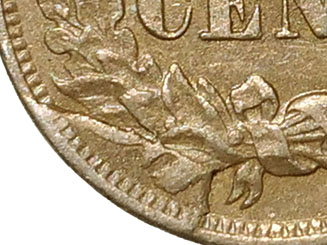
Reverse L.2 Retained Cud


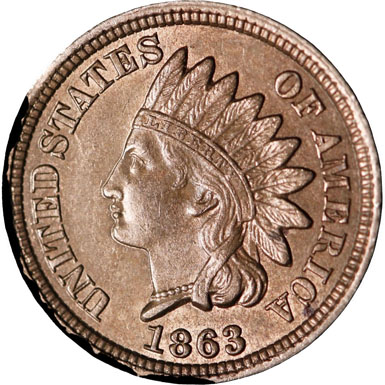
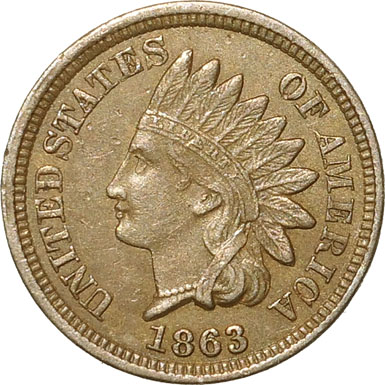
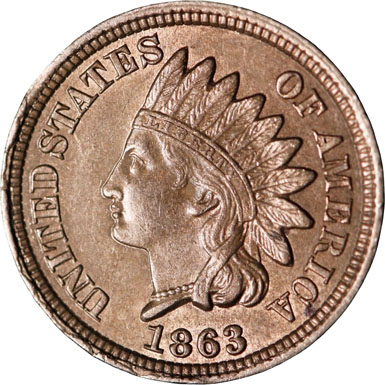
Obverse 11 is identified by date placement at LE and date repunching that features initial date impressions to the northeast within both loops of the 8 and within the lower loop of the 6.  Obverse 11 has developed rim breaks between 6:00 and 10:00.

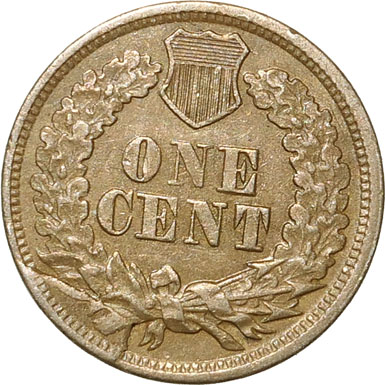
Reverse L is rotated 7 degrees clockwise and develops the following die crack:
1.  Die crack from the denticles at 12:45 downward through the right wreath to the middle arrowhead.
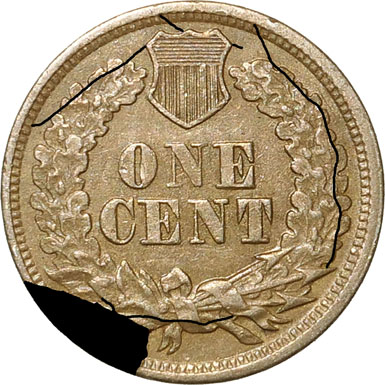
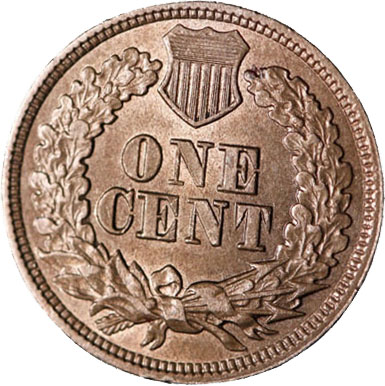
Rev. L.2:  Reverse L has now developed a retained cud between 6:30 and 8:00 as well as the following die cracks:
1.  Die crack from the retained cud through the bottom of the wreath to the right ribbon.
2.  Die crack from the denticles at 9:45 upward through the left wreath to the left side of the shield.
3.  Die crack from the rim at 11:45 through the top of the shield and through the right side of the shield.

Comments:  Both Obverse 11 and Reverse L were struck from misaligned working dies.

The Reverse L retained cud is very similar in size, shape and location to that of the retained cud of Reverse AAL from the 1863 Variety 62 die pairing.

Variety 10a was first identified by this author during mid March 2018.

Plate Coin (Variety 10):  Images courtesy of Ed Nathanson
Plate Coin (Variety 10a):  Keith Bock Collection, XF40

Die States For 1863 Variety 10

VARIETY 10

OBVERSE 11
REVERSE L

VARIETY 10a

OBVERSE 11
REVERSE L.2

Return to 1863 Varieties Table

Return to Date and Die Variety Analysis