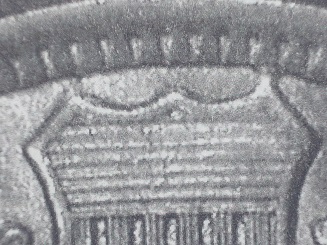
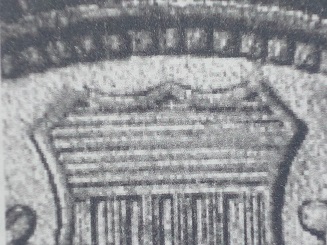
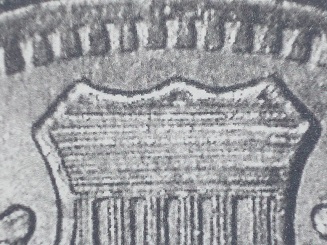
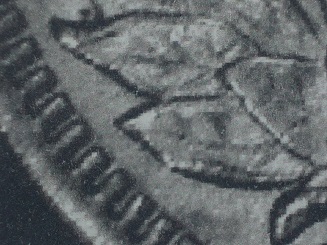
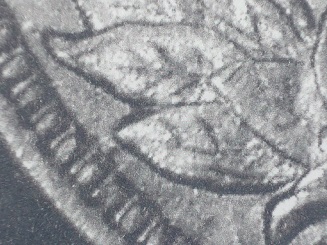
*All images are courtesy of The Flying Eagle and Indian Cent Attribution guide by Rick Snow.
Comments:
In the absence of any other die marker, identifying a reverse is
difficult. A problem with this is that working dies may be lapped
or polished by the mint. If it is a particularly deeply hubbed
reverse die that receives this, than elements such as the shield points
or olive leaf would no longer be connected to the denticles.
Polishing of dies is used to remove clash marks from dies and, if
done aggressively enough, will eliminate the design within the die.
This can be seen with indian cents with a section of thin
denticles or radically, such as the 1937 D buffalo nickel.
Sometimes
a deeply hubbed reverse die will show outlines in the lettering of the
denomination. This can be helpful in determining identification,
also. I have used these outlines on the reverse to verify 1906
Snow 38 obverses. Repunching on this variety is very similar to other
repunched dates, so knowing the attributes of a reverse will serve you
well.