DEFINITIVE REFERENCE FOR INDIAN CENT DIE VARIETIES


Home
Table of Contents
For Sale List
Numismatic Links
David's Numismatic Blog

1889 Variety 25


Obverse 27

Reverse Z


Obverse Diagnostics


Date Position

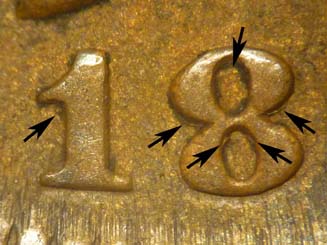
Repunched 18


Repunched 89

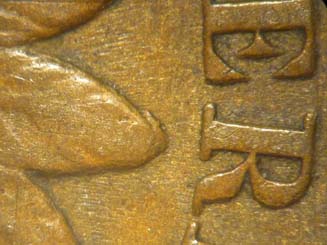
Obverse 27.2 Eighth Feather Tip Die Break


Reverse Diagnostics


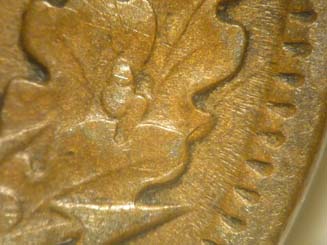
Die Crack From 3:15

Die Crack Between 6:30 and 8:30


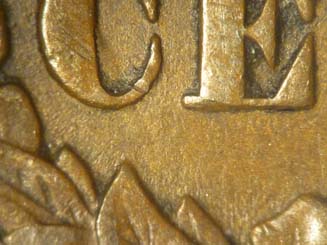
Clash Mark Through The C Of CENT

Reverse Z.2 Retained Cud Between 6:30 and 8:30


Obverse 27 is identified by date placement at C and date repunching that features initial date impressions to the south below the serif of the 1; to the south within the upper loop, outside bottom of the upper loop and within the lower loop of the first 8; to the south within the upper loop, outside bottom of the upper loop and within the lower loop of the second 8; to the south within the upper loop of the 9.  Obverse 27 has developed heavy die flow lines.
Obv. 27.2:  Obverse 27 has developed a small die break at the tip of the eighth feather.

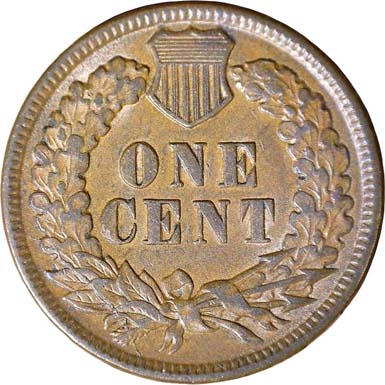
Reverse Z is in a similar die state as Obverse 27, with the advancement of heavy die flow lines.  Reverse Z has acquired clash marks above and to the left of the O of ONE, through the C of CENT and to the right of the denomination.  Reverse Z has developed the following die cracks:
1.  Die crack from the rim at 3:15 downward through the right wreath to the middle arrowhead.
2.  Die crack between 6:30 and 8:30.
Rev. Z.2:  Reverse Z has now formed a retained cud between 6:30 and 8:30.

Comments:   According to Bill Thomas, who gave me permission to use his images of the former plate coin for Variety 25 during late May 2016, the Reverse Z retained cud was first identified in the 'Cud Book Supplement' by Margolis and Thurman.  The Margolis and Thurman reference number is 1C-1889-2R RET.

Plate Coin (Variety 25):  Images courtesy of David Killough Collection
Plate Coin (Variety 25a):  Keith Bock Collection, VF30

Die States For 1889 Variety 25

VARIETY 25

OBVERSE 27
REVERSE Z

VARIETY 25a

OBVERSE 27.2
REVERSE Z.2

Return to 1889 Varieties Table

Return to Date and Die Variety Analysis