DEFINITIVE REFERENCE FOR INDIAN CENT DIE VARIETIES


Home
Table of Contents
For Sale List
Numismatic Links
David's Numismatic Blog

1889 Variety 21


Obverse 5

Reverse E.2


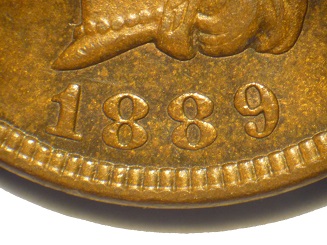
Obverse Diagnostics


Date Position

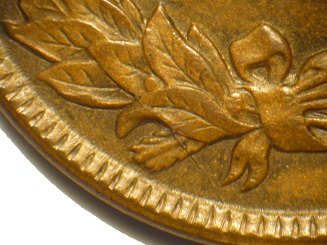
Reverse Diagnostics


Reverse E.2 Die Crack Mapping
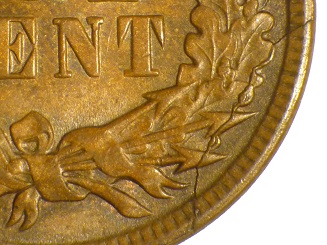

Retained Cud Between 3:00 and 5:00

Die Crack from 6:15


Obverse 5 is observed with date placement at LH, with an upward slope of the date.  Obverse 5 has developed light die flow lines.

Reverse E has developed moderately heavy die flow lines, a retained cud between 3:00 and 5:00 and the following die crack:
1.  Die crack from the denticles at 6:15 through the left wreath to the first oak leaf.

Comments:  Reverse E was initially in service duinrg the 1889 variety 3 die pairing.

In regards to die states that exhibit rim to rim die cracks such as reverse E, careful attention must be paid to ascertain if the area defined by such die cracks is at a different height compared to the field and design area immediately outside this defined area in order to properly attribute retained cuds.  Proper evaluation of rim to rim die cracks will differentiate die cuds from simple rim to rim die cracks, where the die body is still intact.

Variety 3 was first identified by this author during mid December 2014.

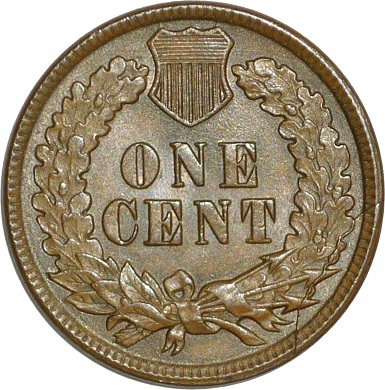
Plate coin:  D. Poliquin Collection, MS63BN

Return to 1889 Varieties Table

Return to Date and Die Variety Analysis