DEFINITIVE REFERENCE FOR INDIAN CENT DIE VARIETIES


Home
Table of Contents
For Sale List
Numismatic Links
David's Numismatic Blog

1889 Variety 15


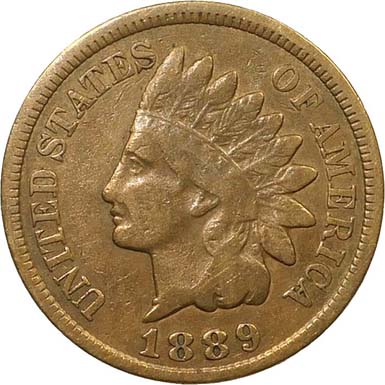
Obverse 17

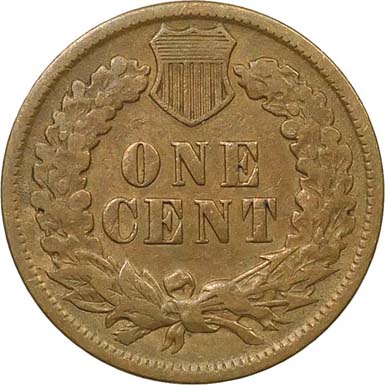
Reverse Q


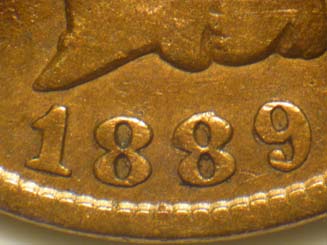
Obverse Diagnostics


Date Position

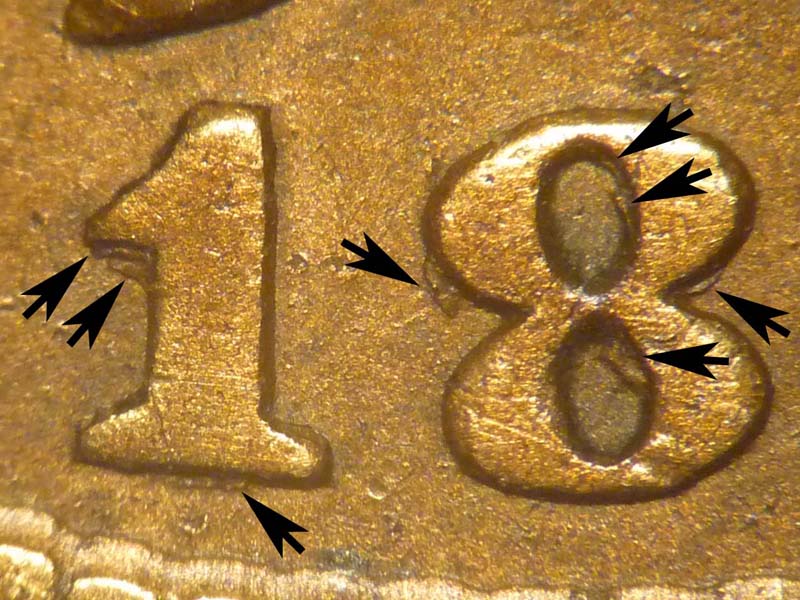
Repunched 1 and First 8 (Click Image To Enlarge)

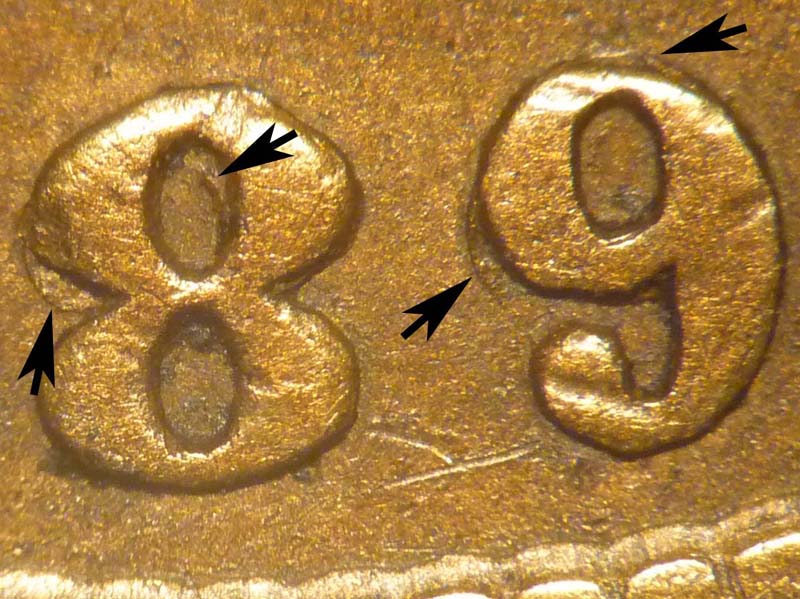
Repunched Second 8 and 9 (Click Image To Enlarge)


Reverse Diagnostics


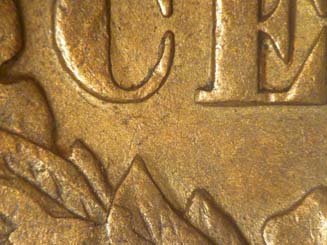
Clash Mark Through (C)ENT

Small Die Gouge From Left Wreath


Reverse Q Die Crack Mapping


Obverse 17 is identified by date placement at RE and date repunching that features initial date impressions to the south below the serif and base of the 1; to the southwest within both loops, to the south below the right side of the upper loop and to the south below the left side of the upper loop of the first 8; to the southwest within the upper loop and to the south below the left side of the upper loop of the second 8; to the southwest within the upper loop and to the left of the upper loop of the 9.

Reverse Q is identified by a small die gouge from the top of the left wreath toward the shield.  Reverse Q has developed heavy die flow lines and has acquired a clash mark through (C)ENT.  Reverse Q has developed the following die cracks:
1.  Die crack from the rim at 2:15 downward through the right wreath.
2.  Die crack within the right wreath at 3:30 downward through the right wreath, middle and lower arrow heads, right ribbon end and intersecting die crack #3.
3.  Die crack from the denticles at 5:00 through the wreath stem, ribbon knot and olive leaves, where it exits into the denticles at 8:00.
4.  Die crack from die rim at 9:00 downward through the left wreath and intersecting die crack #3 at the uppermost olive leaf.
5.  Die cracks from 10:30 and 11:00 downward through the left wreath and converge in the wreath at 10:00, whee the combined crack continues downward where it intersects die crack #4 at 9:00.

Comments:   Obverse 17 features two separate initial date impressions to the south below the serif of the 1 and within the upper loop of the first 8, which was previously unidentified prior to publication in this book.

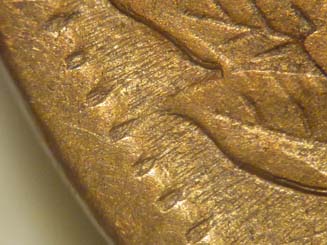
Obverse 17 and Reverse Q exhibit contrasting die states, with Obverse 17 featuring no perceivable die flow lines and Reverse Q exhibiting heavy die flow lines.  The difference in die state between Obverse 17 and Reverse Q indicates that Reverse Q was in service prior to Variety 15.  The following illustrates the difference in die state between Obverse 17 and Reverse Q:


Obverse 17 Surfaces

Reverse Q Die Flow LInes

Plate coin:  Courtesy of David Killough Collection, F12 details

Return to 1889 Varieties Table

Return to Date and Die Variety Analysis